Data Additions
Last updated: June 24, 2026
This article discusses the types of data additions that are done by Archipelago, which you can view when you 📄 Analyze changes under the "Provenance type" drop down.
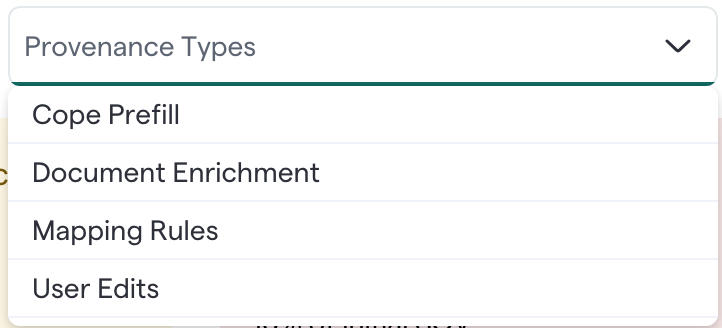
COPE Prefill
In the process of ingesting your data, we have an integration with Cotality to add key missing COPE information such as Number of Buildings, Number of Units, Roof Systems, Building Sprinklered, Construction Type, Year Built and more.
Document Enrichment
When you upload documents, Archipelago AI automatically pulls out property data and populates it into your SOV, and links the value to the document for provenance.
Recommended documents to resolve 📄 Recommendations and populate property data with AI document extraction:
Property Condition Assessments (PCAs)
Roof Inspection Reports
Flood Elevation Certificates
Seismic Risk Analysis
Loss Engineering Reports
Valuation Reports
If you need something different than this, please reach out to support@onarchipelago.com.
Rule Based Data Additions
Rule-based attribute transformation is based on engineering mechanics, structural engineering design practices, building code requirements, regional construction practices, and hazard-specific considerations to add secondary modifiers based on existing information provided. Archipelago’s experienced structural engineering team develops the rules and, after technical peer review, deploys them as part of our SOV Ingestion process.
Rule examples:
Attribute | Value | Rule |
Roof System | Wood | Joisted masonry construction implies a wood roof system |
Cladding/Wall System | Precast Concrete | Precast concrete tilt-up buildings typically have precast concrete wall cladding |
Natural Gas Pipe Seismic/Sway Bracing | No - but not applicable | Buildings outside of a seismic hazard zone are unlikely to have seismically braced sprinkler pipes |